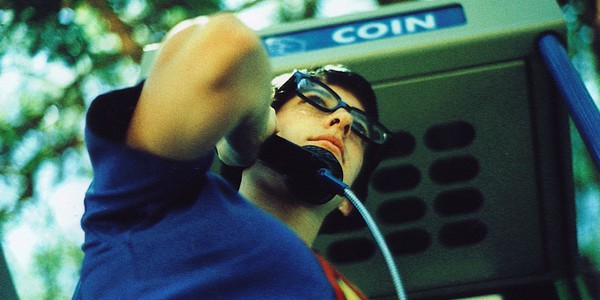
Luise Rainer was
the first actress to win back-to-back Academy Awards.
 |
Luise Rainer, photographed her with her Oscar.
Notice that she wore no make-up, her hair isn't
coiffured, and she was wearing a rather shabby
dress. VERY RAINER! |
Luise Rainer made
a record-setting win after scooping the Academy Award for Best
Actress twice in a row. An article in Internet Movie Database best
depicts Rainer's performance as well as her successive wins for two
of the best films of the 1930's, The Great Ziegfeld (1936) and The
Good Earth (1937).
“As Anna Held, Ziegfeld's common-law wife, Rainer excelled in the musical numbers, but it is for her telephone scene that she is most remembered for. The Great Ziegfeld was a big hit and went on to win the Academy Award as Best Picture of 1936. Rainer received her first of two successive Best Actress Oscars for playing Held.
 |
| Luise Rainer as Anna Held in The Great Ziegfeld (1936). |
 |
| The Great Ziegfeld movie poster. |
 |
Anna Held opposite the love of her love, the great Florenz
Ziegfeld (played by William Powell). |
The award was
highly controversial at the time as she was a relative unknown and it
was only her first nomination, but also because her role was so short
and relatively minor that it better qualified for a supporting
nomination. (While 1936 was the first year that the Academy of Motion
Picture Arts & Sciences honored supporting players, her studio,
Metro-Goldwyn-Mayer, listed her as a lead player, then got out its
block vote for her.) Compounding the controversy was the fact that
Rainer beat out such better known and more respected actresses as
Carole Lombard (her sole Oscar nomination) in My Man Godfrey (1936),
previous Best Actress winner Norma Shearer (her fifth nomination) in
Romeo and Juliet (1936), and Irene Dunne (her second of five
unsuccessful nominations) in Theodora Goes Wild (1936).
Some of the
bitchery was directed towards Louis B. Mayer, whom non-M.G.M. Academy
members resented for his ability to manipulate Academy votes. Other
critics of her first Oscar win claimed it was the result of voters
being unduly impressed with the great budget ($2 million) of "The
Great Ziegfeld" rather than great acting.
Most
observers agree that Rainer won her Oscar as the result of her moving
and poignant performance in just one, single scene in the picture,
the famous telephone scene in which the broken-hearted Held
congratulates Ziegfeld over the telephone on his upcoming marriage to
Billie Burke while trying to retain her composure and her dignity.
During the scene, the camera is entirely focused on Rainer, and she
delivers a tour-de-force performance. Seventy years later, it remains
one of the most famous scenes in movie history. With another actress
playing Held, the scene could have been mawkish, but Rainer brought
the pathos of the scene out and onto film.
She based her
interpretation of the scene on Jean Cocteau's play "La Voix
Humaine." "Cocteau's play is just a telephone conversation
about a woman who has lost her beloved to another woman," Rainer
remembered.
'That is the
comparison. As it fit into the Ziegfeld story, that's how I wrote it.
It's a daily happening, not just in Cocteau.'”
 |
Luise Rainer as the illiterate Chinese farmer O-Lan in
The Good Earth (1937) another Oscar winning role. |
Of her
performance, she said in an interview 60 years after the film's
release, Rainer was dismissive of performance. “I was never proud
of anything," she said. "I just did it like everything
else. To do a film - let me explain to you - it's like having a baby.
You labor, you labor, you labor, and then you have it. And then it
grows up and it grows away from you. But to be proud of giving birth
to a baby? Proud? No, every cow can do that."
Come the awards
night, Luise Rainer did not attend the ceremony, so once Mayer
learned that she had won best actress, he immediately summoned MGM
publicist Howard Strickling to fetch her. She made a commotion when
she arrived so master of ceremonies George Jessel mistakenly
announced her win, which should have been done by Bette Davis.
Of her second
Oscar-winning role, Rainer described the performance as something
that she worked “inside out.”
“It's not for
me, putting on a face, or putting on makeup, or making masquerade. It
has to come from inside out. I knew what I wanted to do and he let me
do it," she said. The win made Rainer the first two-time Oscar
winner in an acting category and the first to win consecutive acting
awards.
Rainer summed up
her Oscar wins as the “worst” possible thing to happen on her
career. In a 1938 interview, Rainer exclaimed that being awarded
twice made her "work all the harder now to prove the Academy was
right." The critic James Agate admired Rainer's performance in
The Good Earth and described it as "an exquisite rendering",
however she was criticised in reviews by Picturegoer. Max Breen was
among those critics indignant that Greta Garbo's performance in
Camille had been overlooked in favor of Rainer.
After 1938, Rainer
had totally totally shown no interest for Hollywood. Her 1943
performance in Hostages was her last, until she made a little
comeback in 1997.
But despite the
short span of her career, Rainer made an imprint in the cinematic
history of Hollywood. In the league of Garbo and Deana Durbin, she
was one of the very few people to turn its back to an industry that a
lot of people turn their whole life to. She was iconic for
portraying—and fighting to play—unglamorous but meaty roles, and
her achievement as a back-to-back Oscar winner is something not every
actress is given the honor to savor.