Labels:

Eugene Domingo, MMFF Queen of Philippine Cinema


Eugene stars in three MMFF entries this year. 


Nothing does like it than Comedy Diva Eugene Domingo. The past Metro Manila Film Festivals, she appeared in a number of films, and she did it again this year, as she lends her presence and talent to three entries: Enteng ng Ina Mo, My Houseband, and Shake, Rattle and Role XIII.

Indeed, it has been a long ride for Eugene Domingo, from her humble beginnings as a bit player in the 1990s, she has emerged as one of the country's most versatile actresses both on screen and on television.

However, she got frustrated within initial foray in showbusiness that she stopped acting and went back to school and attended college. “When I started as a bit player, talagang maghihintay ka kung kelan ka kukunan,  unlike in theater where there is a schedule to follow, and walang pa-star,” she said in an interview with Philippine Daily Inquirer.

But, there was a time, when, out of sheer frustration, she stopped acting for the TV-film cameras. “When I started as a bit player, talagang maghihintay ka kung kelan ka kukunan,  unlike in theater where there is a schedule to follow, and walang pa-star.”

After college, Eugene decided to act exclusively on stage, until lured by friend, TV director Andoy Ranay, give acting a second chance. She was cast by Wenn Derramas to appear as Claudine Barretto's protective friend Simang in the primetime series, Hanggang sa Dulo ng Wala Hanggan, which ran from 2001 until 2003.

“Acting for TV was really sweeter the second time around, kasi natagpuan ko ang  grupo na may respeto sa craft, kasi they also came from theater,” she recalled. While still on her role as Simang, she was cast in Ai-Ai delas Alas breakthrough movie, Ang Tanging Ina, in 2003, where she appeared as Rowena, Ai-Ai's best friend. More film and TV appearances followed. She played as the eccentric mermaid Lorelie in Marina (2004), hosted a cooking Show, Makuha Ka sa Tikim (2005-2006), starred as a witch on the guise of a nun in Kampanerang Kuba (2006), a nanny in Ang Babaeng Hinugot sa Aking Tadyang (2008), the main host in the comedy show Comedy Bar, and as the younger sister in the Nora Aunor comeback starrer Sa Ngalan ng Ina (2011).

In films, she continued appearing as Ai-Ai delas Alas' best friend in hit comedy blockbusters, including Volta (2004), Ang Cute ng Ina Mo (2007), and Ang Tanging Ina Niyong Lahat (2008).

Her biggest break came when she was cast as the two opposing twins in the Kimi Dora (2009), directed by Joyce Bernal. The movie was critically acclaimed box office success that earned Eugene Best Actress Awards from the PMPC and Golden Screen Awards.

Her success with the box office continued in 2010 with Here Comes the Bride, Petrang Kabayo, and Ang Tanging Ina Mo. She also starred in Mamarrazi, Working Girls (both 2010), Wedding Tayo, Wedding Hindi, and Ang Babae Sa Septic Tank, the country's official entry to the 2011 Academy Awards.

Way back 50s and 60s, when the Philippine Cinema was at its brightest, it is normal for the likes of Gloria Romero, Nida Blanca, and Susan Roces to appear in 5, 6 or 7 films in a year. Nora and Vilma did the same at the peak of their careers, but no star dared to repeat the same in the succeeding decades. Except for Eugene Domingo. From her stint in Tanging Ina, Uge has appeared in no less then three films a year, and her screen appearance reached its peak in 2011, when she appeared in six films; not to mention 3 more films set for this years Metro Manila Film Festival.

Of her success, Boots Anson-Roa, her co-star in Shake, Rattle and Roll said: “I’m happy for you. You’re no Anne Curtis, but you made it!”

Eugene is happy and thankful for the success that she enjoys, ”Natuwa ako kasi tama ‘yung timing. Handa na yung utak at katawan ko. Mature na ako nung na-launch ako. Hindi ako nasisilaw sa kasikatan.”

But she also keeps in mind that everything is temporarily and ends in time. “After doing your job, you have to save, you have to invest, because yung mga  award, wala nang makakaalala niyan. Naalala mo ba kung sinong nanalo last year? Baka ako na lang nakaalala na nanalo ako. And, when that happens, sana ‘di ka mapi-feature sa “Wish Ko Lang,” kasi wala ka nang pera! ”


Domingo's acting efforts both in comedy and in drama proved worthy of emulation. Among the awards she received include: best supporting actress at the MMFF for Bahay Kubo; Gawad Tanglaw Award for best supporting actress, Foster Child (2008); Cinemalaya Independent Film Festival best supporting actress, 100 (2008); best actress at the Golden Screen Awards for Kimmy Dora; Famas Award for best supporting actress, Here Comes the Bride; MMFF and Star awards for best supporting actress, Ang Tanging Ina Mo; and best actress for Ang Babae sa Septic Tank. 

0 comments
Labels: ,

18th Screen Actors Guild Award Nominees Unveiled

Holywood's Screen Actors Guild unveiled Wednesday its list of nominees for the 18th SAG Awards. Here is a complete list of nominees. 


The Screen Actors Guild on Wednesday picked nominees for best performances of 2011 in movies and television. While the group that represents actors honors TV performances, the SAG Awards are more closely watched for their impact in the race for Oscars.
Mary Tyler Moore will be given a lifetime achievement honor, and below is a full list of nominees in both film and TV categories, respectively:


FILM 


Best Ensemble Cast
"The Artist"
"Bridesmaids"
"The Descendants"
"The Help"
"Midnight in Paris"


Actor
Demian Bichir, "A Better Life"
George Clooney, "The Descendants"
Leonardo DiCaprio, "J. Edgar Hoover"
Jean Dujardin, "The Artist"
Brad Pitt, "Moneyball"

Actress
Glenn Close, "Albert Nobbs"
Viola Davis, "The Help"
Meryl Streep, "The Iron Lady"
Tilda Swinton, "We Need To Talk About Kevin"
Michelle Williams, "My Week With Marilyn"


Supporting Actor
Kenneth Branagh, "My Week With Marilyn"
Armie Hammer, "J. Edgar"
Jonah Hill, "Moneyball"
Nick Nolte, "Warrior"
Christopher Plummer, "Beginners"


Supporting Actress
Berenice Bejo, "The Artist"
Jessica Chastain, "The Help"
Melissa McCarthy, "Bridesmaids"
Janet McTeer, "Albert Nobbs"
Octavia Spencer, "The Help"


Stunt Performances in a Film
"The Adjustment Bureau"
"Cowboys & Aliens"
"Harry Potter and the Deathly Hallows: Part 2"
"Transformers: Dark Of The Moon
"X-Men: First Class"


TELEVISION 


Best Ensemble Cast - Drama
"Boardwalk Empire"
"Breaking Bad"
"Dexter"
"Game of Thrones"
"The Good Wife"


Actor - Drama
Patrick J. Adams, "Suits"
Steve Buscemi, "Boardwalk Empire"
Kyle Chandler, "Friday Night Lights"
Bryan Cranston, "Breaking Bad"
Michael C. Hall, "Dexter"


Actress - Drama
Kathy Bates, "Harry's Law"
Glenn Close, "Damages"
Jessica Lange, "American Horror Story"
Julianna Margulies, "The Good Wife"
Kyra Sedgwick, "The Closer"


Best Ensemble Cast - Comedy
"30 Rock"
"The Big Bang Theory"
"Glee"
"Modern Family"
"The Office"


Actor - Comedy
Alec Baldwin, "30 Rock"
Ty Burrell, "Modern Family"
Steve Carell, "The Office"
Jon Cryer, "Two And A Half Men"
Eric Stonestreet, "Modern Family"


Actress - Comedy
Julie Bowen, "Modern Family"
Edie Falco, "Nurse Jackie"
Tina Fey, "30 Rock"
Sofia Vergara, "Modern Family"
Betty White, "Hot In Cleveland"


Actor - TV Movie or Miniseries
Laurence Fishburne, "Thurgood"
Paul Giamatti, "Too Big To Fail"
Greg Kinnear, "The Kennedys"
Guy Pearce, "Mildred Pierce"
James Woods, "Too Big To Fail"


Actress - TV Movie or Miniseries
Diane Lane, "Cinema Verite"
Maggie Smith, "Downton Abbey"
Emily Watson, "Appropriate Adult"
Betty White, "Hallmark Hall Of Fame: The Lost Valentine"
Kate Winslet, "Mildred Pierce"


Stunt Performances in a TV Series
"Dexter"
"Game of Thrones"
"Southland"
"Spartacus: Gods of the Arena"
"True Blood"

0 comments
Labels: , , ,

69th Golden Globe Award Nominees Announced

The Hollywood Foreign Press Club announced Thursday morning the finalist for the 69th Golden Globe Awards. Here is a complete list of nominees. 


Picture, Drama: “The Descendants,” “The Help,” “Hugo,” “The Ides of March,” “Moneyball,” “War Horse.”


Picture, Musical or Comedy: “50/50,” “The Artist,” “Bridesmaids,” “Midnight in Paris,” “My Week with Marilyn.”


Actor, Drama: George Clooney, “The Descendants”; Leonardo DiCaprio, “J. Edgar”; Michael Fassbender, “Shame”; Ryan Gosling, “The Ides of March”; Brad Pitt, “Moneyball.”


Actress, Drama: Glenn Close, “Albert Nobbs”; Viola Davis, “The Help”; Rooney Mara, “The Girl with the Dragon Tattoo”; Meryl Streep, “The Iron Lady”; Tilda Swinton, “We Need to Talk About Kevin.”


Director: Woody Allen, “Midnight in Paris”; George Clooney, “The Ides of March”; Michel Hazanavicius, “The Artist”; Alexander Payne, “The Descendants”; Martin Scorsese, “Hugo.”


Actor, Musical or Comedy: Jean Dujardin, “The Artist”; Brendan Gleeson, “The Guard”; Joseph Gordon-Levitt, “50/50”; Ryan Gosling, “Crazy, Stupid, Love”; Owen Wilson, “Midnight in Paris.”


Actress, Musical or Comedy: Jodie Foster, “Carnage”; Charlize Theron, “Young Adult”; Kristen Wiig, “Bridesmaids”; Michelle Williams, “My Week with Marilyn”; Kate Winslet, “Carnage.”


Supporting Actor: Kenneth Branagh, “My Week with Marilyn”; Albert Brooks, “Drive”; Jonah Hill, “Moneyball”; Viggo Mortensen, “A Dangerous Method”; Christopher Plummer, “Beginners.”


Supporting Actress: Berenice Bejo, “The Artist”; Jessica Chastain, “The Help”; Janet McTeer, “Albert Nobbs”; Octavia Spencer, “The Help”; Shailene Woodley, “The Descendants.”


Foreign Language: “The Flowers of War,” “In the Land of Blood and Honey,” “The Kid with a Bike,” “A Separation,” “The Skin I Live In.”


Animated Film: “The Adventures of Tintin,” “Arthur Christmas,” “Cars 2,” “Puss in Boots,” “Rango.”


Screenplay: Woody Allen, “Midnight in Paris”; George Clooney, Grant Heslov, Beau Willimon, “The Ides of March”; Michel Hazanavicius, “The Artist”; Alexander Payne, Nat Faxon, Jim Rash, “The Descendants”; Steven Zaillian, Aaron Sorkin, “Moneyball.”


Original Score: Ludovic Bource, “The Artist”; Abel Korzeniowski, “W.E.”; Trent Reznor, Atticus Ross, “The Girl with the Dragon Tattoo”; Howard Shore, “Hugo”; John Williams, “War Horse.”


Original Song: “Hello Hello” (music by Elton John, lyrics by Bernie Taupin), “Gnomeo & Juliet”; “The Keeper” (music and lyrics by Chris Cornell), “Machine Gun Preacher”; “Lay Your Head Down” (music by Brian Byrne, lyrics by Glenn Close), “Albert Nobbs”; “The Living Proof” (music by Mary J. Blige, Thomas Newman, Harvey Mason Jr., lyrics by Mary J. Blige, Harvey Mason Jr., Damon Thomas), “The Help”; “Masterpiece” (music and lyrics by Madonna, Julie Frost, Jimmy Harry), “W.E.”


TELEVISION


Series, Drama: “American Horror Story,” FX; “Boardwalk Empire,” HBO; “Boss,” Starz; “Game of Thrones,” HBO; “Homeland,” Showtime.


Actor, Drama: Steve Buscemi, “Boardwalk Empire”; Bryan Cranston, “Breaking Bad”; Kelsey Grammer, “Boss”; Jeremy Irons, “The Borgias”; Damian Lewis, “Homeland.”


Actress, Drama: Claire Danes, “Homeland”; Mireille Enos, “The Killing”; Julianna Margulies, “The Good Wife”; Madeleine Stowe, “Revenge”; Callie Thorne, “Necessary Roughness.”


Series, Musical or Comedy: “Enlightened,” HBO; “Episodes,” Showtime; “Glee,” Fox; “Modern Family,” ABC; “New Girl,” Fox.


Actress, Musical or Comedy: Laura Dern, “Enlightened”; Zooey Deschanel, “New Girl”; Tina Fey, “30 Rock”; Laura Linney, “The Big C”; Amy Poehler, “Parks and Recreation.”


Actor, Musical or Comedy: Alec Baldwin, “30 Rock”; David Duchovny, “Californication”; Johnny Galecki, “The Big Bang Theory”; Thomas Jane, “Hung”; Matt LeBlanc, “Episodes.”


 Miniseries or Movie: “Cinema Verite,” HBO; “Downton Abbey (Masterpiece),” PBS; “The Hour,” BBC America; “Mildred Pierce,” HBO; “Too Big to Fail,” HBO.


Actress, Miniseries or Movie: Romola Garai, “The Hour”; Diane Lane, “Cinema Verite”; Elizabeth McGovern, “Downton Abbey (Masterpiece),” Emily Watson, “Appropriate Adult”; Kate Winslet, “Mildred Pierce.”


Actor, Miniseries or Movie: Hugh Bonneville, “Downton Abbey (Masterpiece)”; Idris Elba, “Luther”; William Hurt, “Too Big to Fail”; Bill Nighy, “Page Eight (Masterpiece)”; Dominic West, “The Hour.”


Supporting Actress, Series, Miniseries or Movie: Jessica Lange, “American Horror Story”; Kelly Macdonald, “Boardwalk Empire; Maggie Smith, “Downton Abbey (Masterpiece)”; Sofia Vergara, “Modern Family”; Evan Rachel Wood, “Mildred Pierce.”


Supporting Actor, Series, Miniseries or Movie: Peter Dinklage, “Game of Thrones”; Paul Giamatti, “Too Big to Fail”; Guy Pierce, “Mildred Pierce”; Tim Robbins, “Cinema Verite”; Eric Stonestreet, “Modern Family.


0 comments
Labels: , , , ,

59th FAMAS Award

Ang Tanging Ina Mo Wins Best Picture, Albert Martinez Best Director; Ai-Ai delas Alas and John Lloyd Cruz Snag Top Acting Prizes.


The Filipino Academy for Movie Arts and Sciences (FAMAS) goes for comedy this year, with Ang Tanging Ina Mo grabbing the Best Picture honors in the 59th FAMAS Awards. The third series of the Tanging Ina Installment also won the same feat in the 2010 Metro Manila Film Festival and Star Awards for Movies. The film was directed by Wenn Derramas and produced by Star Cinema.


Comedy Queen Ai-Ai delas Alas became one of the only three actresses to win the most coveted Best Actress trophy for comedy, after her turn in Ang Tanging Ina Mo. The two previous winners for comedy roles were Judy Ann Santos, who won for Kasal, Kasali, Kasalo (2006), and Ms. Gloria Romero, who won for Dalagang Ilokana (1954). She bested out past best actress winners Lorna Tolentino and Dawn Zulueta and fellow nominees Bea Alonzo and Jennylyn Mercado, who earned nods for dramatic performances. 


John Lloyd Cruz won his second FAMAS and first Best Actor trophy for Miss You Like Crazy, where he played opposite fellow nominee Bea Alonzo. He had earlier won Best Supporting Actor as Aga Muhlach's younger brother in Dubai (2003). 


Meanwhile, Albert Martinez won Best Director for Rosario. This was his first directorial debut and the film competed in last year's MMFF, where he and the film were the leading favorites for the best director and best film awards, although the feat went to Wenn Derramas and Ang Tanging Ina Mo, respectively. 


Eugene Domingo and Allen Dizon won the best supporting actor and actress awards, respectively. Domingo earned the trophy for her role as the feisty lawyer whose soul switched with Angelica Panganiban in the summer blockbuster Here Comes the Bride. Meanwhile, Dizon scooped his fourth FAMAS trophy and second award for best supporting actor for his turn in the indi flick, Sigwa. He has won best actor for Paupahan (2008) and Dukot (2009) and best supporting actor for Twilight Dancers (2006).


Meanwhile, child stars Zyriel Manabat and Maliksi Morales were awarded best child performers. Manabat won for her role as Ai-ai delas Alas' grand daughter in Ang Tanging Ina Mo, while Morales won for portraying Kris Aquino's son in the horror flick, Dalaw. 

The 59th Annual FAMAS Awards Night was held December 10 at the National Commission for Culture and the Arts (NCCA) Theater.


Personal Note:


It's sad to note that Asia's oldest film award giving body has gone to oblivion. In the 50s and 60s, when the FAMAS was the only award giving body in the Orient, the awards night is the most glittering event in the local film industry and all the stars emerged to witness the most memorable moment of the year. Sadly, the same cannot be said these days. Since the FAMAS split into two factions in the recent decade, there's seems to be no stopping from the organizing from plunging into decline, and even the winners has been put to contention of whether or not they are worthy of receiving the prize.  Something's ought to be done here. FAMAS is not just your ordinary award giving body. It's a part of the Philippine cinema's history and literally, the local showbusiness grew with FAMAS. 


Even an actor proclaimed to be the year's best wouldn't care, because FAMAS has become insignificant these days. Once, a performer's mettle as an effective actor is measured by the award he's won. But today, nobody cares because it's importance as a significant recognition has faltered through the recent years. Even so, a grand slam feat would never be complete with without this golden statuette of prime significance in Philippine movies. 


0 comments
Labels: , , , , , ,

The Battle of Station IDs: ABS-CBN, GMA, and TV5

This time of the year, a TV station's supremacy is measured it's Christmas station ID that showcases which is home to the country's brightest, hottest, and most glittering stars. This year, the competition among the country's biggest stations beefs up with star-studded station IDs featuring stars on their holiday mood.

The Kapamilya Station features the bond that ties families during Christmas. Reaching out to Filipinos all over the world, this year's station ID warms up the cold Christmas that overseas Filipinos feel with top Kapamilya stars giving them a little glow of hope this season. The station ID features the voice of Fil-Am Youtube sensation Maria Aragon.

Meanwhile, the Kapuso station this year features its stable of talents as they sing carols to audience who are eager to seek merriment at the merriest part of the year. The station ID features show-by-show stars, from Eat Bulaga to prime time soap operas as they sing Jingle Bell-inspired carols to avid Kapuso viewers.

This year saw TV5 expand this talents as the station welcomes the latest Kapatids who transferred to the newest TV station in the country. The TV station this year showcases the fun and excitement that Christmas brings, with Kapatid stars eager to entertain a lonely boy and transform his dull house in a home fit for the holidays. Features latest TV5 talent Sharon Cuneta, who switched network last November.

Kapamilya's The Best ang Pasko, Performed by Maria Aragon


Kapuso's Kapusong Pasko Eat Bulaga Version, Performed by Eat Bulaga Stars


Kapatid's Krismas Mas Masaya, Performed by Sharon Cuneta


0 comments
Labels: , ,

Charlie Chaplin: Silent Screen's Greatest Actor


April 16, 2011 - Today the world celebrates Charlie Chaplin’s 122nd birthday. A watershed figure in the film industry, Chaplin is one of Hollywood’s earliest superstars, alongside Mary Pickford and Douglas Fairbanks. Chaplin’s career was one of the most colorful and most successful in Hollywood during his time, himself becoming a film director, producer, and composer. His contribution to the history of filmmaking was so profound that today he is considered one of the screen’s most indelible icons.

Birth and Childhood
Born to a relatively comfortable household, Chaplin’s family however lost most of their fortune during his childhood. Her mother and father were both music hall entertainers and his father, who abandoned them, died in 1901 due to alcoholism. His mother continued working as an entertainer and Chaplin himself made his nascent debut at the age of 5. Unluckily, mental illness soon placed her mother under institutional care and Charlie, together with older half-brother Sydney, were forced to live between public charity homes and on the streets. 


or read one of these books and learn more about Charlie Chaplin's life:


Charlie Chaplin My Autobiography
   
Tramp: The Life Of Charlie Chaplin


The Comedy of Charlie Chaplin: Artistry in Motion


or watched these videos from Amazon:

Charlie Chaplin: Limelight [VHS]

Charlie Chaplin Short Comedy Classics - The Complete Restored Essanay & Mutual Collection


0 comments
Labels: , , , , , ,

Greta Garbo: Hollywood's Immortal Goddess


When talking about Old Hollywood, it would easily pass into your mind the intensity of Bette Davis, the glamour of Audrey Hepburn, the allure of Marlene Dietrich , the notoriety of Lana Turner, the independence of Katharine Hepburn, Barbara Stanwyck, and Luise Rainer, and the whims of other similar, yet less stellar Hollywood icons. But when we talk about Garbo, we can’t say anything but be awed by her presence or, should I say, immortality.

She made a mere 17 films in Hollywood and yet, each of those films assured her stature as Hollywood’s bona fide goddess, looked upon, admired, sometimes mocked by others. But all in all, Garbo became the epitome and probably the most inscrutable star of the Hollywood of the 1930s.

Early Years

Greta Gustafson was born in Stockholm Sweden in 1905 to poor parents. At an early age, when her father became too ill to win bread, Greta worked as a barbershop latherer and sales lady at a department store in Stockholm. There, she sometimes appeared as model or actress during the plays sponsored by the store. At one of those plays, she caught the sight of Sweden’s formidable director, Mauritz B. Stiller. Later, she won a scholarship to the Royal Dramatic Theater.

Welcome to Hollywood

Her first foray into acting took place when Stiller cast her in The Atonement of Gosta Berling (1924), afterwards, she became herself a sensation in Sweden. In 1925, together with Stiller, she sailed to the United States, where she played as a contract player in Metro Goldwyn Mayer (MGM), Hollywood’s brightest studio.

The Flesh and the Devil and Gilbert


Her first year in Hollywood became uneventful. Louis B. Mayer had earlier found her stout and stiff when acting, thus, she was cast as a Spanish maiden in some uneventful silents. However, things took their turns in 1926 when she was cast opposite Hollywood’s top leading man, John Gilbert in Flesh and the Devil. After it turned out to be a box office hit, Garbo was propelled to stardom. With her exotic looks and mystifying aura, the audiences cannot help but be lured by the seemingly goddess-like image of Garbo. Other than being her breakthrough film to celebrity status, Flesh and Devil also introduced Garbo into a love affair with Gilbert that lasted until his death in 1934. They ultimately became the hottest loveteam, on and off screen, during the last years of the silent film era.

Garbo was the ultimate run-away bride. Rumors had it that there were wedding bells heard, culminated by their affair. Only it was halted when Garbo felt cold feet in marrying him and decided to run away. She did it twice until Gilbert got tired and married another silent film actress, Ina Claire.

Garbo Becomes a Superstar

Garbo’s stellar rise was further solidified with continual smash hit, one after the other. With Love and The Divine Woman (both in 1927), The Mysterious Lady and A Woman of Affairs (both in 1928), and Wild Orchids (1929), she became silent screen’s last superstar. And she was also the era’s last actress to transition into speaking roles. Ending her silence with The Kiss (1929), Garbo waited until 1930 to make her first speaking part in Anna Christie (1930). She earned two Oscar nominations for her performance in this film and for Romance (1930), only to lose to fellow MGM queen, Norma Shearer.

Indeed, the early part of the 1930s where her most glorious. Her next vehicles, Sussan Lennox (Her Fall and Rise) and Mata Hari in 1931 proved too well at the box office, enough to justify her salary demand of half a million dollars for the two films (she hurdled more than three million dollars by 1941, after she left Hollywood, a very huge fortune at that time).

Garbo, alongside Norma Shearer, Joan Crawford, Marlene Dietrich, and Mae West, was already Hollywood’s leading lady and one of the industry’s highest paid and legendary stars of the era. But it was her performance in the Oscar-winning, all star Grand Hotel (1932) that made her an immortal. In this film, she uttered her legendary line “I vant to be alone,” all in her thick, husky Swedish accent.

After Grand Hotel, Garbo sailed back to Sweden after MGM failed to meet her salary demands. She returned in 1933 after the studio offered the unheard-of quarter a million dollars and more clout to appear as the eponymous lead in Queen Christina. She exercised her control over the film when she had Laurence Olivier replaced by her former lover and then- already tarnished John Gilbert. It was a box office hit and her last time to pair with Gilbert. When news of Gilbert’s death reached her while on the set of The Painted Veil (1934), Garbo collapsed.

Garbo continued to her success with Anna Karenina (1935) and Camille (1936), costume dramas which made more money abroad than it did in the US. Both were critically acclaimed and won her back to back best actress awards during the New York Film Critics Award, the latter earning her her third Oscar nomination. This time, she lost to fellow MGM star Luise Rainer. Rainer herself was already dubbed “new Garbo” because of her refusal to bow to convention.

Box Office Poison

Garbo’s next film, Conquest, became a flop. Until 1949, it was the biggest money loser of MGM. And though it fared well at the box office, it failed to coup its staggering expenses. By 1938, together with Katharine Hepburn, Fred Astaire, Joan Crawford, Dolores del Rio, Marlene Dietrich, and May West, she was dubbed box office poison.

Garbo Laughs

However, she quickly rebounded in her first comedy film Ninotchka (1939), one of the most memorable films during Hollywood’s Golden Year, 1939. It was a box office and earned Garbo her fourth and final Oscar nomination. She lost to Vivien Leigh.

Garbo Runs Away

Garbo did not make another film until Two Faced Woman, her last. It was both panned by critics and audience and Garbo planned a what should have been temporary retirement. However, it became permanent.

In 1951, she became a naturalized American citizen. In 1953, she transferred to New York and bought a seven-room flat where she lived for the rest of her life. In 1954, she received in absentia an Honorary Academy Award for her contribution to the motion picture industry.

Death

Garbo died a very wealthy woman in 1990. She frugally spent her money and wisely invested her million-dollar income in real estate. Her beauty and image was so haunting that to this day, one would still count her not just any other actress. She was a goddess and only very few of her colleagues can equal her. None of today’s star can ever surpass her. She was very much a star; a legendary superstar, that is.


(reposted from my Friendster blog)

Read Garbo's biographies and be enchanted by her life:

Greta Garbo: A Life Apart Greta Garbo - The Signature Collection (Anna Christie / Mata Hari / Grand Hotel / Queen Christina / Anna Karenina / Camille / Ninotchka / Garbo Silents) Garbo Greta Garbo: Divine (Movie Icons)

0 comments
Labels: , , , , ,

Elizabeth: Golden Hollywood's Last Greatest Star

Elizabeth Taylor is the violet-eyed, raven-haired beauty whose colorful personal life has for most of the time eclipsed her career. Nevertheless, she wouldn’t be the iconic legend that she will be today without the scandals, intrigues, marital storms, charitable endeavors, and unforgettable screen performances that graced her life.

Early Years

Elizabeth Rosemond Taylor was born at Heathwood near London on February 27, 1932 to Francis Lenn Taylor and Sarah Viola Warmbrodt. She held a dual citizenship, coming from American-born parents who reside in London and, herself, being born in British soil. Her family moved to Los Angeles when Great Britain was on the brinks of World War II, where his father opened an art gallery, which displayed the numerous paintings he brought from England.

Child Actress

Taylor’s career began in 1941, after Universal Studio signed her up for a seven-year contract. She appeared in her first picture in 1942, There’s One Born Every Minute, though she never made another film with Universal.

Taylor while shooting National Velvet (1944).
In 1943, Metro-Goldwyn-Mayer offered the lead role in a Lassie Come Home. After its success, she was offered a seven-year contract, at $100 a week. Breakthrough came sooner after she was cast as a young girl who trained her beloved horse to win the Grand National in National Velvet (1944).

National Velvet Makes Her a Star

National Velvet was a colossal box office hit, grossing more than $4 million. Critics fell in love with her and Bosley Crowther of The New York Times wrote that her “face is alive with youthful spirit, her voice has the softness of sweet song, and her whole manner in this picture is one of her refreshing face.” However, a fall while riding the horse while shooting the film triggered her back problem that worsened in her later years.

Velvet’s success was followed by Courage of Lassie (1946), which saw her popularly increase and her paycheck raise to $750 a week. Throughout the rest of the 1940s, Taylor’s success as an adolescent star was solidified in Life with Father (1947), A Date with Judy (1948), and Little Women (1948).

Taylor Becomes a Superstar


As Taylor transitioned to more mature roles, her popularity, unlike other child stars, continued to soar. In 1950, her salary was raised to $2,000 per week, with her box office potency continued, with the most notable films made opposite Spencer Tracy, Father of the Bride (1950) and its sequel Father’s Little Dividend (1951).


For her role as the spoiled socialite who stood between Montgomery Clift and Shelley Winters in George Stevens’A Place in the Sun (1951), Taylor image as a dramatic actress was shaped.

However, the next films she was cast in, including Callaway Went Away (1951), Ivanhoe (1952), The Girl Who Had Everything (1953), and Beau Brummel (1954) dissatisfied her as she longed for meatier roles.


Giant and Critical Successes

Taylor opposite Paul Newman in Cat on a Hot Tin Roof (1958).
Taylor’s interest with her career was revived when she was cast to play a meaty performance in Giant (1956), opposite James Dean and Rock Hudson. More critically acclaimed roles followed, as well as Academy Award nominations for Best Actress for her compelling performances in Raintree County (1957), Cat on a Hot Tin Roof (1958), and Suddenly Last Summer (1959).
In 1960, Taylor filmed Butterfield 8, which depicted the story of a Manhattan prostitute. In 1961, at the height of the award season, she nearly died of pneumonia but a successful tracheotomy stabilized her condition as well as earned her a “sympathy vote” for Best Actress in the Academy Award. Her success with the Oscars became controversial at that the time and fellow nominee, Shirley Maclaine was said to have exclaimed, “I lost to tracheotomy!”

Cleopatra

Taylor as Cleopatra (1963).
After winning the Academy Award, Taylor started filming Cleopatra, perhaps the most expensive film ever produced and the most controversial motion picture that she ever starred in. Taylor herself made history when she was paid $1 million, the first person to receive such a hefty paycheck; she eventually pocketed $7, being the owner of part of the film’s profits.

Cleopatra was originally geared as a $2-million mega-epic extravaganza, showcasing the life and love affairs of the notorious Serpent of the Nile. But as delays went on, the cost of production eventually spiraled to $44 million. The film topped 1963’s box office list, earning more than $26 million but the studio, 20th Century Fox still lost substantially because of its excessive cost.

Who’s Afraid of Virginia Woolf?

Taylor gives a tour de force, Oscar-winning performance opposite
 Richard Burton in  Who's Afraid of Virginia Woolf? (1966)
.
In 1966, Taylor appeared in Who’s Afraid of Virginia Woolf, considered as her most critically acclaimed performance. She intentionally gained weight and appeared unglamorous for this part, whose alcoholic, obnoxious role as Richard Burton’s wife deservedly won her the Academy Award for Best Actress. Virginia Woolf also marked the peak of Taylor’s artistic excellence, which she followed, though not as a acclaimed as Virginia Woolf, with Reflections of a Golden Eye (1967) opposite Marlon Brando, and Secret Ceremony (1968) opposite Mia Farrow. At the onset of the 1970’s Taylor made fewer film appearances, with the live-action, big-screen version of The Flintstones (1994) as her last feature film.

Taylor Appears on TV

Taylor became more and more active in television as her film career waned. She made her foray in daytime soap operas, with her appearances in General Hospital and All My Children. Her last TV appearance was in These Old Broads, opposite Shirley Maclaine, Joan Collins, and former reel and real life rival Debbie Reynolds in 2001.

Taylor’s Marriages

Taylor married eight times, twice to actor and onscreen partner Richard Burton.

Her first marriage was with hotel heir Conrad Hilton, Jr. She married him in 1950 and divorced in 1951, less than eight months later.In 1952, she married Michael Wilding, an actor, to whom she had two children: Michael Jr and Edward. They divorced in 1957.

Taylor was twice married to Richard Burton.
A few days after divorcing Wilding, she married film and theater producer Michael Todd. They had a daughter Elizabeth. Their marriage ended after Todd died in a plane crash in 1958, less than one year after they were married.

Taylor’s fourth husband was Eddie Fisher, whom she married in 1959. Taylor’s marriage to Fisher, who was Todd’s best friend, stained Taylor’s image and reputation for ruining Fisher’s marriage with actress Debbie Reynolds.

While still married to Fisher, Taylor starred in Cleopatra, appearing opposite Richard Burton. The two fell in love while on the set and their torrid love affair was the subject of much publicity during their days. Taylor divorced Fisher while Burton, who himself was married, divorced his wife. They married in 1964 and appeared in many films following Cleopatra. They divorced 10 years later and remarried the following year only to be divorced again 10 months later. Their marriage was highlighted by their extravagant lifestyle, making headlines after Burton bought Taylor a diamond from Cartier that weighed almost 70 carats.

Taylor’s seventh husband was John Warner, a Republican senator from Virginia. They wedded in 1976 and divorced in 1982.

In 1991, married his eighth and final husband, construction worker Larry Fortensky, who was 20 years her junior. The marriage gained publicity after Michael Jackson gave her away. They divorced in 1996.

AIDS Activism

The death of Taylor’s close friend Rock Hudson in 1985 spurred her to be an active AIDS advocate. Hudson became one of the first high-profile personalities to die from this dreaded disease.

Taylor is an active advocate of AIDS research.
Taylor dedicated much of her time and attention to raising funds and spreading awareness for this cause. Raising more than $250 million dollars, Taylor was one of the founders of the American Foundation for AIDS Research, she herself founding the Elizabeth Taylor AIDS Foundation. Already a well-awarded actress, her humanitarian, fun-raising, and charitable efforts earned her numerous honors and acclamations, too.

Later Honors and Recognitions

In 1992, the Academy of Motion Picture Arts and Sciences honored Taylor’s indomitable contributions to the battle against AIDS with the Jean Herscholt Humanitarian Award. In 1992, she was given the Life Achievement Award by the Screen Actors Guild. In 1999, the American Film Institute listed Taylor number 7 in its list of 25 Greatest American Female Screen Legends. In 2000, Queen Elizabeth II made her a Dame Commander of the British Empire while President George W. Bush awarded her with the Presidential Citizens Medal in 2001 for her humanitarian work.

Entrepreneurship and Wealth

In her later years, Taylor launched successful
jewelry and perfume lines.
Taylor is estimated to be worth as much as $1 billion at the time of her death. Court filings showed that she is worth more $608.4 when she divorced Larry Fortensky in 1996.

Much of her wealth was derived from her lucrative Elizabeth Arden perfume lines which debuted in the 1980s and her famed jewelry collection.

Passion, her first perfume product, was released in 1987, which was followed in 1991 by White Diamond. Elizabeth Arden reported that her perfumes have already sold more than $1 billion.
Her massive jewels meanwhile, which include a ruby and diamond Cartier necklace gifted by Mike Todd and the 33.19-carat Krupp Diamond and 69.74-carat pear-shaped Burton-Diamond bought at $1 million in 1969, were valued at $270 million way back 2002.

Meanwhile, her real estate holdings, which include her ranch-style house in LA, are estimated to be worth over $150 million.

Death

Taylor struggled with poor health in the later years of her life, having been hospitalized more than 70 times and undergoing more than 20 operations. She was admitted into the Cedars-Sinai Medical Center in February 2011 to undergo treatment due to symptoms of congestive heart failure. She succumbed on March 23, surrounded by her four children.

Learn more about Elizabeth Taylor with these selected books about her:

Liz: An Intimate Biography of Elizabeth Taylor Elizabeth: The Life of Elizabeth Taylor Elizabeth How to Be a Movie Star: Elizabeth Taylor in Hollywood

0 comments
Labels:
LUISE RAINER: Hollywood's Centennarian


People, given the opportunity of becoming a star, would surely rush in and go get their share of popularity. But not Luise Rainer. Dubbed as the Hollywood’s “new Hepburn and next Garbo,” she was one of the very few people – including Hepburn and Garbo – who shunned stardom and balked at the conventional, even empty life that most of her contemporaries enjoyed, and eventually suffered from.

But despite her seemingly meteoric rise, and sudden disappearance from the limelight, Luise Rainer had her fair share of unforgettable performances and memorable films, which makes her an immortal actress, performer, and screen legend in her own right.

This Viennese import was from the stage. She was cast in a host of MGM extravaganza, gearing her up to become the studio’s next queen of the lot. However, Rainer, from the very start, eschewed Hollywood’s standards. She was born a rebel and she walked on the streets without makeup and wearing dirty, often unfashionable clothes.

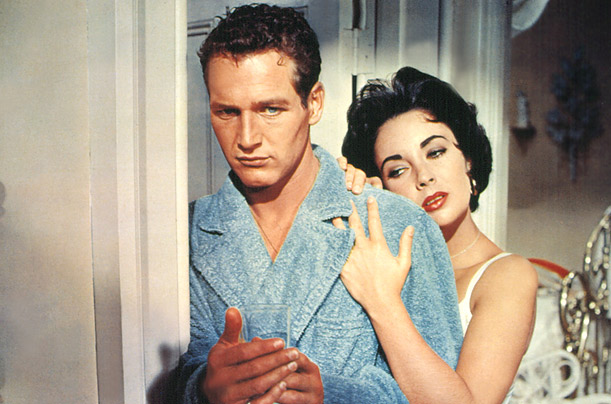
But no one can deny her acting prowess. Her years on the stage eventually honed her craft and despite the rarity of good scripts, she was lucky enough to be cast as the long-suffering Anna Held opposite Tyrone Power’s Florence Ziegfeld in The Great Ziegfeld (1936). In the well-remembered telephone scene, where she congratulated Ziegfeld for his success in Broadway, Rainer gave a tour de force performance rich in emotion, despair, and loneliness that earned her her first Academy Award for Best Actress, beating the likes of Irene Dunne and Norma Shearer.

The following year, she appeared as the Chinese peasant, O’Lan, in Irving Thalberg’s last super-production before he succumbed to tuberculosis, The Good Earth (1937). She again won the Academy Award, becoming the first actress to win back-to-back Academy Awards, a record that only Katharine Hepburn was able to equal after her double triumph in 1967 and 1968.

But it seemed that Rainer could not hold on the momentum. The backlash after The Good Earth was inevitable. She yearned for meatier performances, which ended her with a clash with MGM’s big boss, Louis B. Mayer. With Thalberg already dead, no one in the studio and in Hollywood knew how to utilize her. Eventually, her bout with Mayer took its toll on her career as she was miscast in a series of lackluster roles that left her disillusioned more than ever. At the height of her discontent and during a heated argument with Mayer, she was able to say “I am 20, you are 60. By the time I am 40, the age of a successful actress, you’ll be dead!” With a crumbling marriage with playwright Clifford Odets, she found no reason to stay in Hollywood any longer. After 1938, she walked out from her contract and from then on, she only appeared in two more films, one in 1943 and another in 1997.

Rainer might have been derided by studio boss and contemporaries for being too stubborn and distant from what was considered convention. But compared to most actresses of here era, Rainer was an intellectual who thought in her own way and yearned for artistic and intellectual freedom, free from the dictation of the studios. And with her compelling performances in The Great Ziegfeld and The Good Earth, Rainer had left a legacy of being a true Hollywood rebel who didn’t bowed towards convention but did what she think was right. Celebrating her first century last month and living at a comfortable apartment in London, Rainer is the oldest competitive winner of an Oscar, the first back-to-back Academy Award winner, and, together with Shirley Temple, Maureen O’Hara, Olivia de Havilland, Joan Fontaine, Gloria Stewart, and Deanna Durbin, one of the last surviving legends of Hollywood’s most golden era.

Photo credits:

commons.wikimedia.org

independent.co.uk

das-kleine-nachtbuechlein.blog.de/2010/01/12/luise-rainer-vergesene-frau-7739234/

1 comments
Related Posts Plugin for WordPress, Blogger...

Pageviews

 
More Stars in Heaven © 2012 | Designed by Canvas Art, in collaboration with Business Listings , Radio stations and Corporate Office Headquarters